
Last updated November 23, 2026
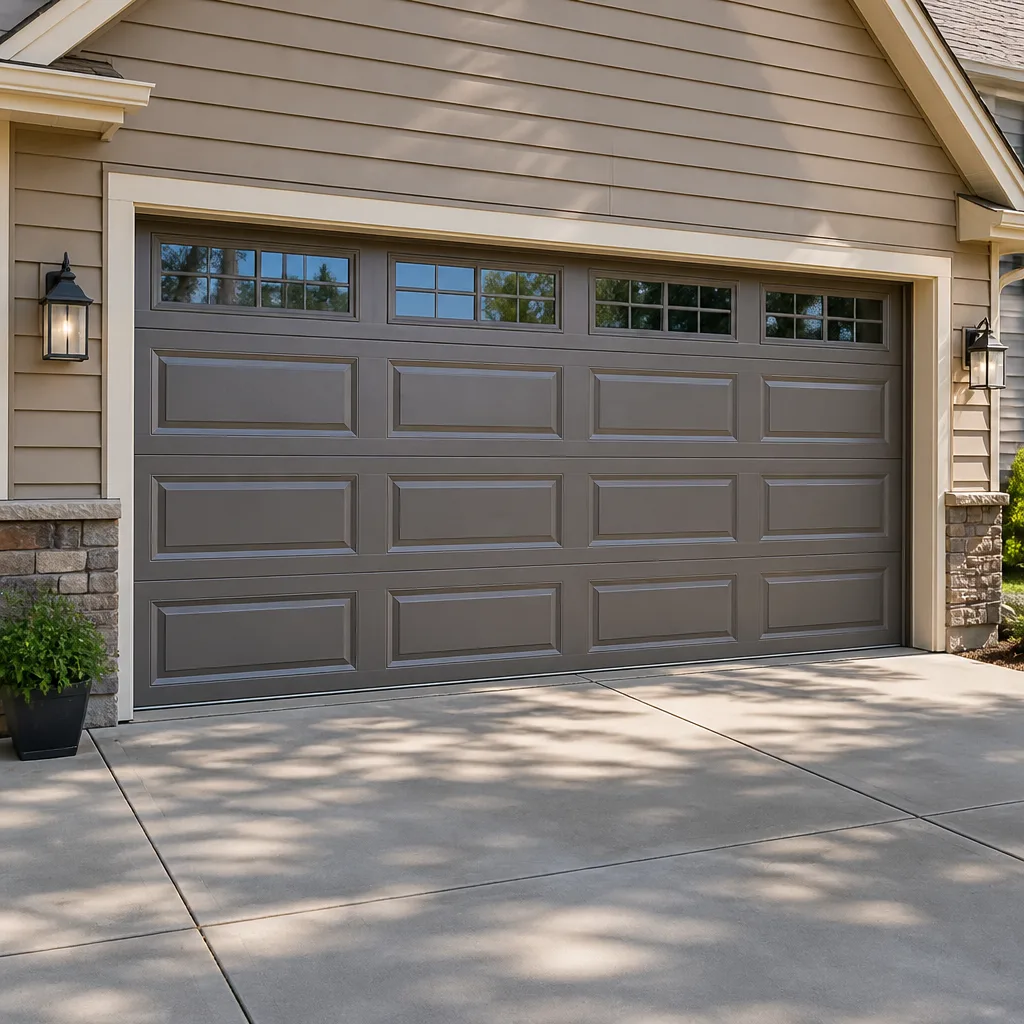 Raised-panel steel
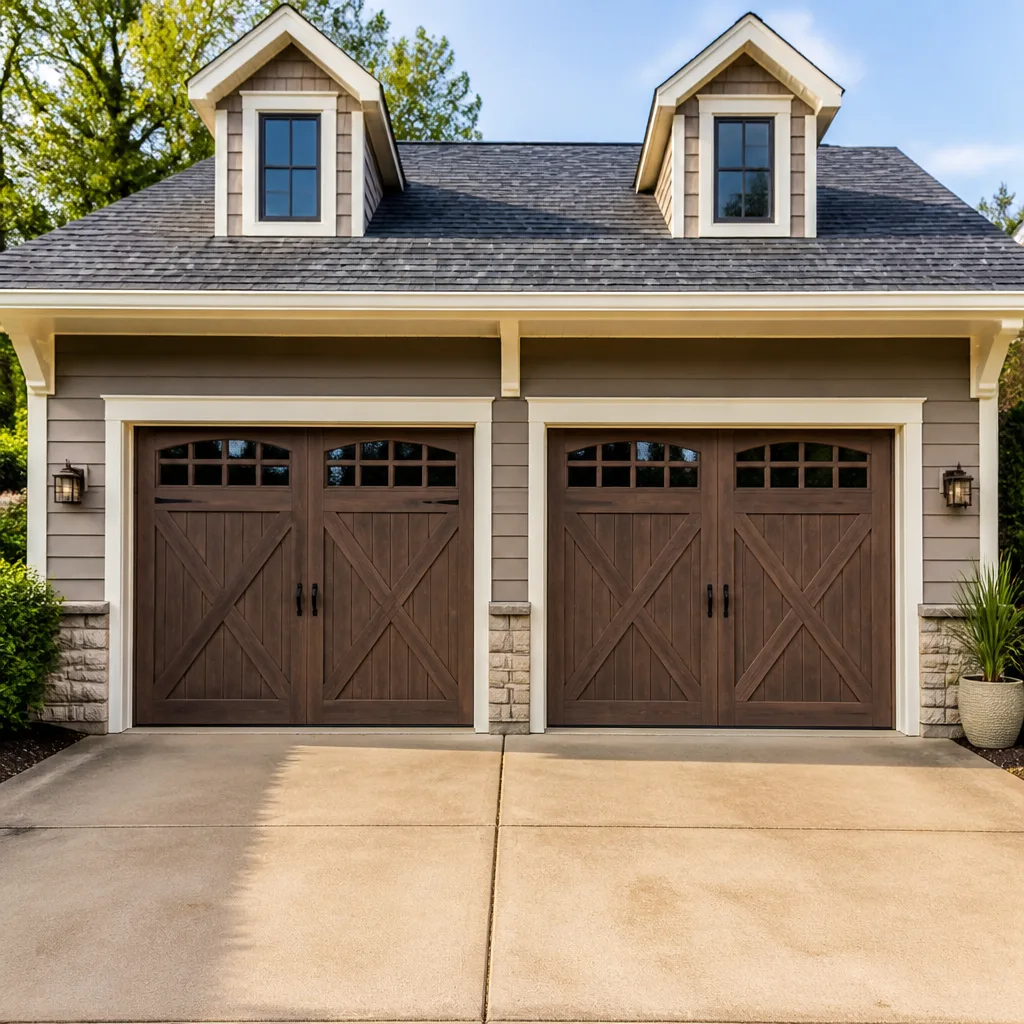 Carriage house
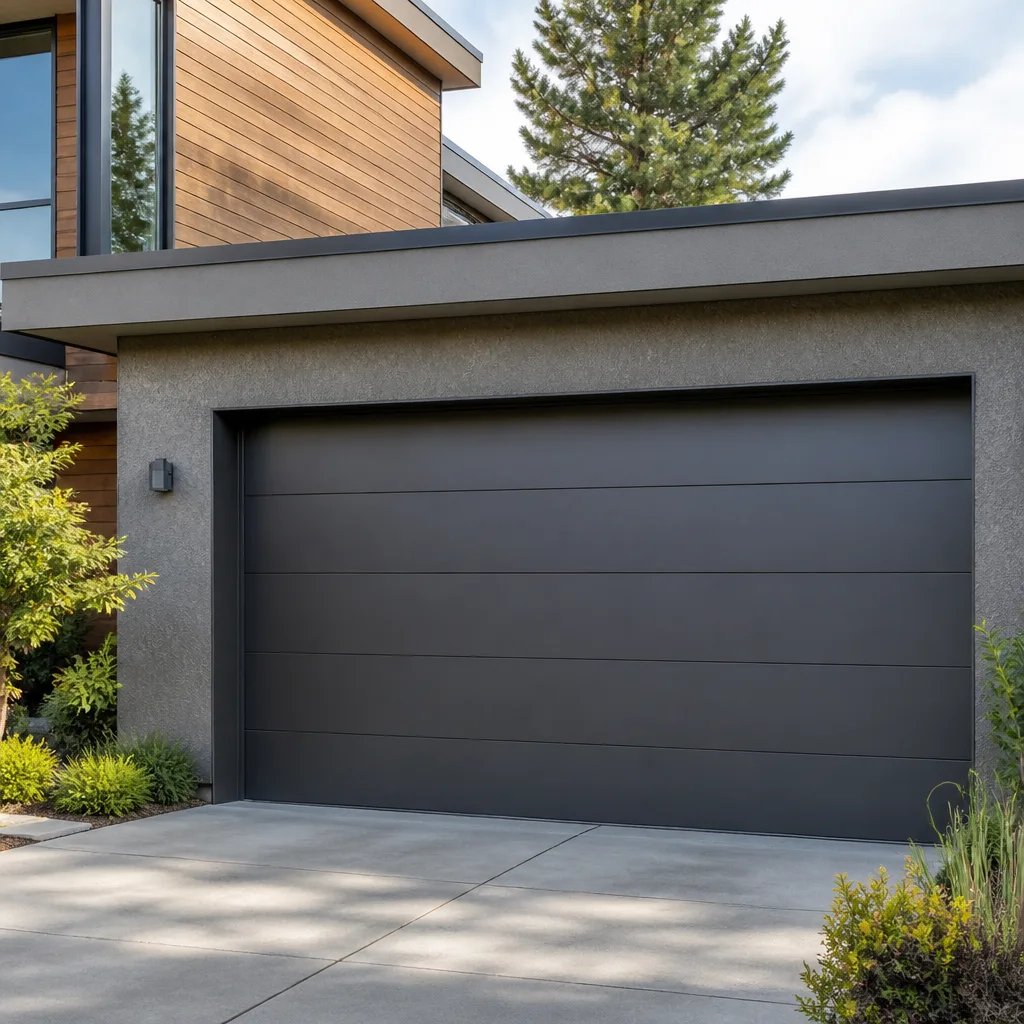 Modern flush
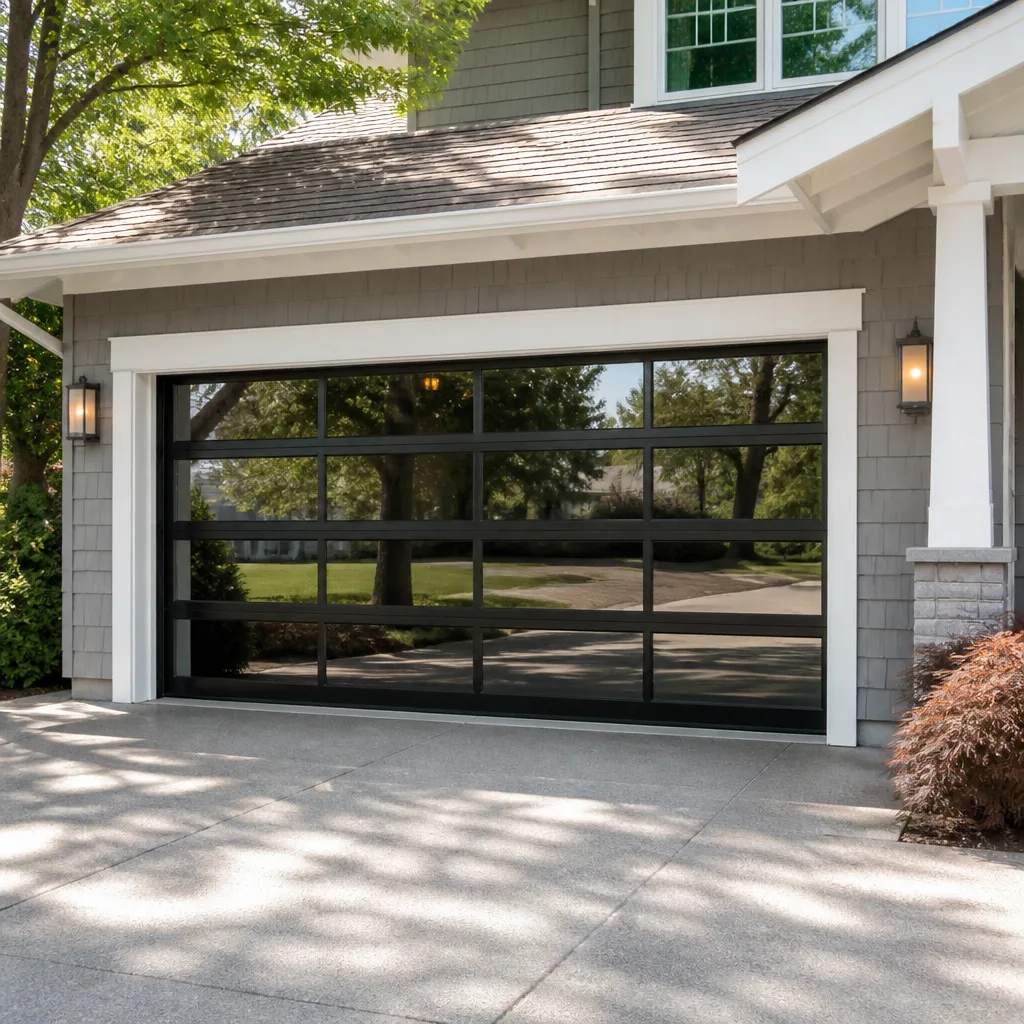 Full-view glass
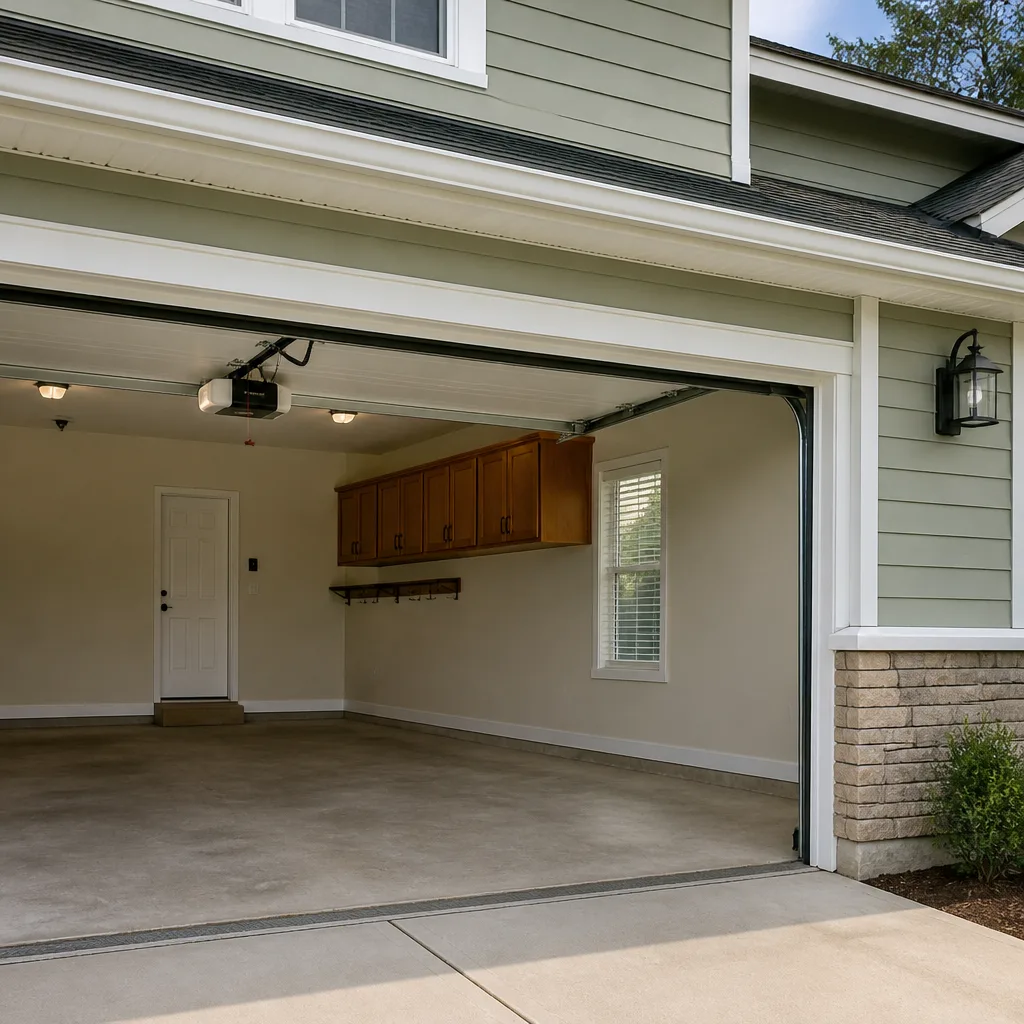 LiftMaster openers
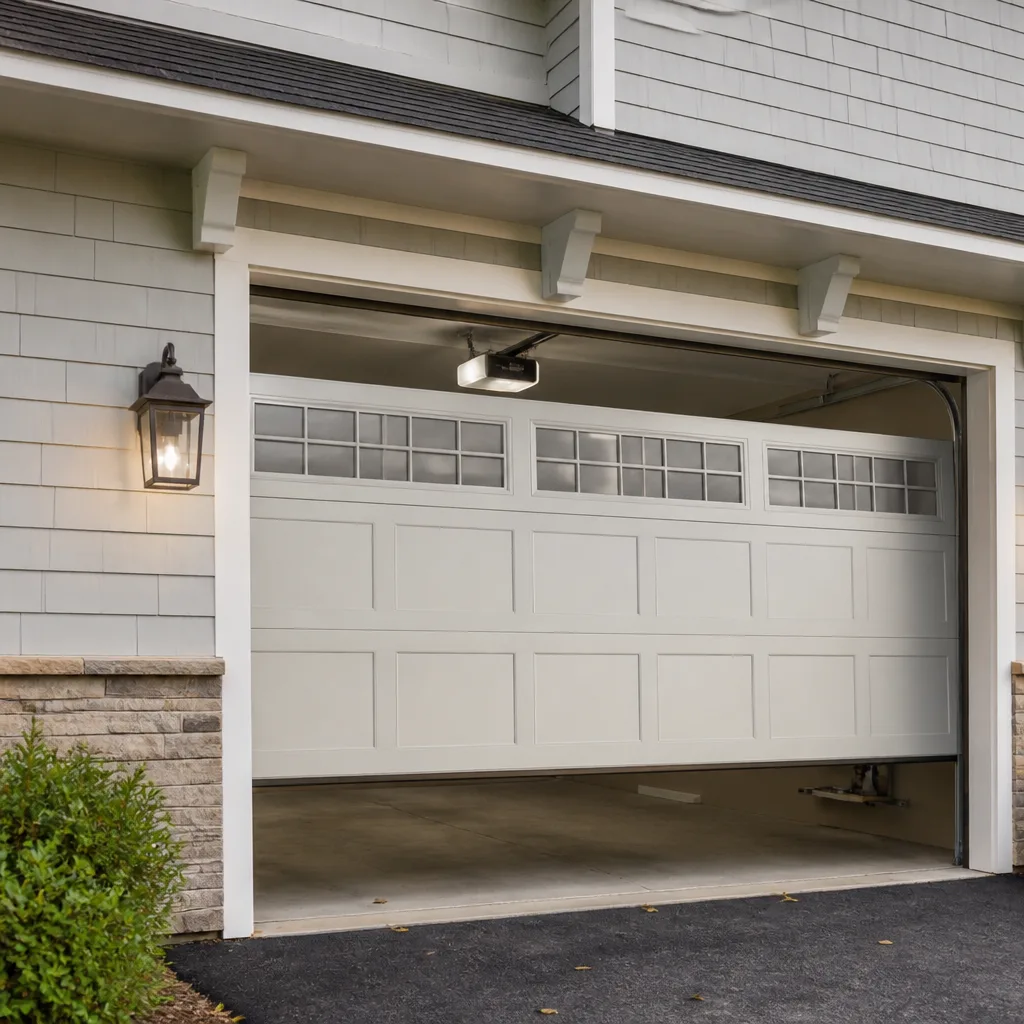 Chamberlain openers
Full 25-point door and opener safety check with every visit - springs, cables, rollers, tracks, and your LiftMaster or Chamberlain opener included
You get a price before we start. It does not change when the pro arrives.
Get your free estimateDIY vs Professional Garage Door: The Hamilton Homeowner’s Decision Guide
Most homeowners who hurt themselves working on a garage door were not careless – they were confident. That’s the trap. The debate people have in their heads is usually “am I handy enough to do this myself?” but that’s the wrong question. The right question is “does this specific task carry injury risk, or is it a genuine homeowner job?” The answer changes from component to component. Replacing a bottom seal and lubricating hinges are safe tasks that technicians get paid for every week. Touching a torsion spring is a different category entirely, and it isn’t about your skill level. This guide draws that line clearly for Hamilton homeowners, task by task, so you stop debating the wrong question and start making the right call for each job.
Quick Answer
A handful of garage door jobs are genuinely safe for homeowners: replacing the bottom weather seal, lubricating hinges and rollers, tightening loose brackets, and adjusting opener limit switches. Everything involving torsion springs, extension springs, cables, and the door’s balance system is professional-only, full stop, because those parts store enough energy to cause serious injury in under a second. The middle ground – panel replacement, track straightening, opener motor swaps – depends on your tools, your comfort with heights, and your ability to recognize when to stop. In Hamilton, where doors open and close dozens of times a day through hot summers and cold winters, the wear pattern makes those middle-ground decisions come up often.
Styles & brands we work with
- Raised-panel steel
- Carriage house
- Modern flush
- Full-view glass
- LiftMaster openers
- Chamberlain openers
Table of Contents
- Where the Line Actually Is: Risk by Component
- Genuinely Safe DIY Tasks (and Their Prerequisites)
- The Middle Ground: Tasks That Need Caution and Specific Tools
- Professional-Only Tasks With No Exceptions
- The Cost Math: When DIY Saves Money and When It Costs More
- Ohio’s Homeowner Exemption and When It Stops Protecting You
- The Stop Point: How to Recognize It Before It’s Past
- What Makes Hamilton Garage Doors Wear Differently
Where the Line Actually Is: Risk by Component
The garage door industry has a tendency to over-hedge. Every task gets labeled “professional only” because it’s easier than teaching homeowners which jobs are safe. That’s not helpful, and it’s why so many people end up on a ladder with a wrench they shouldn’t be holding. The real risk line runs through the energy stored in the door system, not through the complexity of the repair.
Here’s how the components sort out:
- Torsion springs – Professional only. A wound torsion spring holds stored rotational energy equivalent to the weight of the door itself, and releasing it incorrectly causes hand, finger, and arm injuries fast. This is not a task to learn on.
- Extension springs – Professional only. Same stored-energy problem, different orientation, and the cables running along them are under constant tension.
- Lift cables – Professional only. A cable under tension can whip when released, and incorrect routing can drop the door.
- Bottom seal / weather seal – Safe for homeowners. No stored energy, no springs involved, easy to measure and cut.
- Hinges, rollers, and pivot brackets – Mostly safe, with caveats about the door being fully closed and the opener disconnected first.
- Opener motors and logic boards – Depends on the model. Belt and screw-drive motor swaps on newer LiftMaster, Chamberlain, or Genie units are doable for a careful homeowner; older Craftsman units and anything requiring rewiring tend to go wrong.
- Panels and tracks – Mixed. A single panel swap on an Amarr or Wayne Dalton door can be reasonable. Track straightening after a vehicle strike usually is not, because alignment tolerances are tight.
What this means in practice: roughly a third of the calls that come into a garage door company in Hamilton don’t need to be calls at all. The other two-thirds absolutely do.
Genuinely Safe DIY Tasks (and Their Prerequisites)
These are the jobs where doing it yourself is a legitimate financial decision, not a gamble. Each one comes with a clear go/no-go criterion so you know whether you’re equipped before you start.
Replacing the Bottom Weather Seal
Go if: you can identify the seal profile (T-style, U-style, or bulb) and you have a tape measure, utility knife, and a pair of pliers. No-go if: the seal channel is rusted or the retainer is cracked – in that case the retainer needs replacement too, and that’s a different job.
Lubricating Hinges, Rollers, and Tracks
Go if: you have a garage-door-specific silicone or lithium lubricant (not WD-40, which attracts dust) and a rag. No-go if: any roller is cracked, flat-spotted, or missing a bearing cap. Lubricating a failing roller just delays the replacement.
Tightening Loose Hinges and Brackets
Go if: the fasteners haven’t stripped and the door is fully closed with the opener disconnected. No-go if: the hinge itself is cracked or the bracket hole has elongated. Once the metal is deformed, torque won’t save it.
Adjusting Opener Travel Limits and Force Settings
Go if: you have the opener’s manual (LiftMaster and Chamberlain units have accessible limit screws on the motor housing) and you can watch the door cycle through a full open and close. No-go if: the door reverses inconsistently or the opener responds erratically to the remote. That points at a logic board or safety-sensor problem, not a limit setting.
Replacing the Photo-Eye Safety Sensors
Go if: the sensors are the same model number as the originals and you’re comfortable with low-voltage wiring. No-go if: the wiring runs through a wall or into a ceiling conduit – the routing becomes the hard part.
None of these tasks touch stored energy, and none require a technician’s tools. They’re the jobs where a Saturday afternoon and a $25 parts bill is a reasonable trade for a $150 service call.
The Middle Ground: Tasks That Need Caution and Specific Tools
A handful of jobs sit between “obviously fine” and “obviously not.” They’re not automatically dangerous, but they require specific tools, specific knowledge, and an honest assessment of the risk of a failed attempt. Get them wrong and you’re not just out the parts cost – you may damage the door system in a way that turns a $200 job into a $900 one.
Opener Motor Replacement
Swapping a motor head on a same-model LiftMaster or Chamberlain unit is doable if you can lift 25 to 40 pounds overhead, have a socket set, and can follow the specific wiring diagram. Where it goes wrong: the safety sensor alignment, the torque setting, and the rail-to-motor connection. Any of those three causes a door that “works” but reverses unpredictably or binds mid-travel.
Single Panel Replacement
Panels are matched to the rest of the door by profile, color, and window configuration. On an Amarr or Clopay door this is generally a straight bolt-on. On a Wayne Dalton or Raynor with a specific embossment pattern, matching panels becomes the real challenge before you even get to the installation.
Track Straightening After a Bump
Minor bends – the door’s bottom section drags, or one side doesn’t seal flush – can sometimes be corrected. Anything more and the track has lost its geometry. Setting a track back correctly requires understanding that the vertical track should be plumb and the horizontal track should be level, and getting it “close enough” leads to premature roller wear.
Roller Replacement
Replacing rollers sounds easy. The trick is that some rollers are on tension when the door is closed, and some are on tension when it’s open. Removing the wrong one first can drop the door section a few inches onto the opener arm. For a homeowner who knows which is which, it’s fine. For everyone else, this is where we see the door end up off-track.
If you’re reading this section and thinking “I can probably do that” without being sure, that’s your signal. The middle ground is where overconfidence costs the most.
Professional-Only Tasks With No Exceptions
There are jobs on a garage door where we don’t give homeowners “how to do it” instructions even when asked. Not because we want the work – because the physics don’t allow for a safe learning curve. Here they are, plainly:
- Torsion spring replacement and adjustment – The single most dangerous component on any garage door. A properly wound torsion spring holds enough energy that releasing the winding bars incorrectly can break a wrist or worse.
- Extension spring replacement – Same stored energy, different orientation. The cables running alongside extension springs are under constant tension from the day they’re installed.
- Lift cable replacement or re-cable after a snap – A snapped cable has already released its energy; installing a new one means winding it correctly onto the drum, which is a two-person task even for technicians.
- Bottom bracket replacement – The bracket the lift cable attaches to at the base of the door is under continuous tension from the cable. Removing it without relieving that tension is how people get hurt.
- Spring shaft and bearing plate work – Anything on the torsion tube itself.
- Door off-track recovery after a hard strike – When the door is hanging off the track or has pulled a hinge out of the stile, the door’s weight is being supported unevenly. Recovering it involves controlled unloading, which requires two technicians and the right tools.
If a door slams shut and snaps a spring, or an opener grinds and the door sits wrong in its tracks, calling a technician isn’t the cautious choice – it’s the correct one. When your door won’t open, close, or stay closed, that’s the moment to stop and call. Springs are the most dangerous component in any garage door system, and we handle them so you don’t have to.
The Cost Math: When DIY Saves Money and When It Costs More
Here’s the calculation most homeowners skip. DIY doesn’t win just because you avoid the service call – it wins when the parts cost plus your time plus the risk of a failed attempt is lower than the professional price. For the five most common garage door repairs in Hamilton, that math breaks down differently for each one.
Bottom Weather Seal Replacement
Parts cost for a standard 16-foot seal is modest. If you have the right profile measurement, this is a clear DIY win. Buy the wrong profile and you’ve spent the parts money twice.
Hinge and Roller Replacement
Rollers are inexpensive individually; hinges are too. A full set is a moderate parts bill. If you know which rollers are under tension, DIY saves real money. If you don’t, a dropped door section costs more than the entire professional job.
Photo-Eye Sensor Replacement
Replacement sensors are inexpensive, but only if you can match the model to your opener. Generic sensors on a LiftMaster or Chamberlain unit often fail to pair. Match the brand and DIY is a win; mismatch and you’re calling anyway.
Opener Motor Replacement
A same-model motor swap is a moderate parts cost plus two hours of your Sunday. A technician charges for the labor but arrives knowing whether the failure is the motor or the logic board – a diagnostic judgment that’s easy to miss and expensive to get wrong.
Torsion Spring Replacement
Springs themselves are not expensive parts. This is not a price-driven decision – it’s a safety one. A spring replacement is one spring per manufacturer spec; when a matched pair is warranted, that’s two springs. The math isn’t “parts vs. labor” here. It’s “professional replacement vs. the risk of an injury or a door that falls the wrong way.”
The Failed-Attempt Rule
Here’s the rule we tell homeowners to use: if a task involves touching a part on the door and you’re not sure whether that part is under tension, do not proceed. A failed attempt on a safe task costs you the parts bill. A failed attempt on a tension-loaded task costs you a door repair on top of the original problem, and sometimes a hospital visit. That asymmetry is where the decision actually lives.
Ohio’s Homeowner Exemption and When It Stops Protecting You
Ohio, like most states, allows a homeowner to work on their own residence without a contractor’s license – and that exemption is genuine. If you own the home and live in it, you can replace a bottom seal, lubricate your hinges, or swap a sensor without pulling a permit in most Hamilton jurisdictions. That’s how it should be. The exemption exists so that homeowners can maintain their own property without regulatory friction, and it’s not something to be afraid of.
Where it stops protecting you is at three specific points:
- Warranty coverage on the door or opener. Many manufacturers void certain coverage when a repair is performed improperly by anyone other than a licensed technician – even the homeowner. If you have a warranty in force on an Amarr or Clopay door, or a LiftMaster opener still under warranty, check the terms before you start. A DIY fix that voids a warranty on a $1,500 door is expensive math.
- Insurance coverage if a repair causes damage. If a DIY repair leads to a door failure that damages a vehicle or hits a person, homeowners insurance may treat the resulting claim differently than if a licensed contractor performed the work. Whether coverage applies depends on your specific policy, so it’s worth a call to your agent before tackling anything involving stored energy or an electrical connection.
- Selling the home. Some buyers and their inspectors will flag homeowner-performed garage door repairs, and a professional paper trail can smooth the disclosure. Not every transaction cares – but some do, especially on doors with recent major repairs.
None of this should stop you from replacing your own bottom seal. All of it should stop you from winding your own torsion spring.
The Stop Point: How to Recognize It Before It’s Past
Every failed DIY attempt we’ve seen had a moment – a few seconds or a few minutes – where the homeowner could have stopped and called instead of pushing through. In our experience, the signs are consistent, and they’re learnable.
Signs You’ve Reached the Stop Point
- The part moves when you didn’t expect it to. Any unexpected movement on a loaded component is a signal to stop. Set the tool down, step back, and reassess.
- You’ve re-done the same step more than twice. Two attempts to align a sensor, two attempts to seat a hinge, two attempts to route a cable – the third is where things go wrong.
- You’re missing a tool the manual names by name. If the manual says “use a winding bar” or “use a torque wrench” and you don’t have one, don’t substitute.
- The door behaves differently after your repair than before it. Reverses unpredictably, binds halfway, or sits uneven in the tracks. These are signs the repair introduced a new problem, and pushing on can turn one repair into three.
- You hear a metal-on-metal scrape you didn’t hear before you started. That sound is either a new alignment problem or a failure in progress.
What to Do at the Stop Point
Disconnect the opener if it’s an electrical job, close the door fully if the door is still on the tracks, and stop. Don’t try to unwind what you just wound. Don’t force the door closed if it’s jammed. Call us and describe what happened – we’ve heard the description before, and we’ll know whether to come out right away or whether you’re safe to leave the door until we can schedule. We answer 24/7. Fast dispatch from 7am to 7pm, Sunday through Friday.
What Makes Hamilton Garage Doors Wear Differently
Garage doors don’t wear out at a fixed rate. They wear out based on how many cycles they run, how much temperature swing they see, and how many times they’ve been bumped or neglected. Hamilton homes see a lot of all three.
A door that serves as the primary entry point for a family gets 6 to 10 open-and-close cycles a day, which is more than double the average residential door. That adds up faster than most homeowners realize, and it’s why the springs in a Hamilton door used as the daily garage entrance wear out on a shorter cycle than a door that only opens for the car.
Then there’s the Ohio season swing. Door seals take a beating from summer heat that softens them and winter cold that stiffens them, and tracks that were straight in July can bind in January when the metal contracts. Panel joints take on moisture that shows up as rust along the bottom of the door near the frame. None of this is dramatic; it’s the wear pattern that shows up reliably on Hamilton doors, and it favors proactive maintenance over waiting for a failure.
We work on the equipment from eight manufacturers – LiftMaster, Chamberlain, Genie, Clopay, Amarr, Wayne Dalton, Craftsman, and Raynor – and the wear patterns differ by brand. Wayne Dalton’s older panels set differently from Clopay’s, and Craftsman openers from the 2000s have quirks that newer LiftMaster or Chamberlain units don’t. Knowing the brand up front means we’re diagnosing from a familiar starting point rather than guessing, which is why we ask before we arrive. Our technicians have up to 8 years of experience and have worked on doors across every one of those lines.
If you’re not sure which task is on your plate, the fastest thing you can do is call and describe what the door is doing. Sometimes you’ll get an answer that’s “that’s a safe DIY” and sometimes you’ll get “that one comes with us.” Either way, you’re not guessing.
Common Mistakes to Avoid
- Treating every garage door task as equally safe. A door spring and a door seal are not in the same category, and the assumption that “it’s all one door” is how injuries happen. The line runs through stored energy, not through complexity.
- Using WD-40 on the door tracks. It attracts dust and grit, which turns into a grinding paste that wears rollers faster. Silicone or lithium spray is the correct product and it’s not expensive.
- Replacing one torsion spring when a matched pair is warranted. Springs are matched from the factory; if one has snapped, the other is typically at the end of its life too. Replacing just one is a short-term fix that costs more in the long run.
- Trying to force a door that has jumped the track back into position. If the door has come off the track, its weight is supported unevenly. Pushing it back almost always makes it worse; leave it and call. When your door won’t open, close, or stay closed after a track failure, that’s the call.
- Adjusting the opener force setting to compensate for a binding door. A binding door is telling you something is wrong with the door, not the opener. Raising force to overcome the bind is how doors fall on cars.
- Skipping the disconnect before working on an opener. Even with the power off at the breaker, disconnecting the door from the opener rail is standard practice before working on any door hardware. Skipping it on an Amarr or Wayne Dalton door with an older Craftsman opener has caused more than one unpleasant surprise in Hamilton.
- Assuming your garage door’s warranty covers homeowner repairs automatically. Many warranties require professional installation for certain repairs, and skip this step and you can lose coverage on a repair you were capable of doing correctly.
See the difference
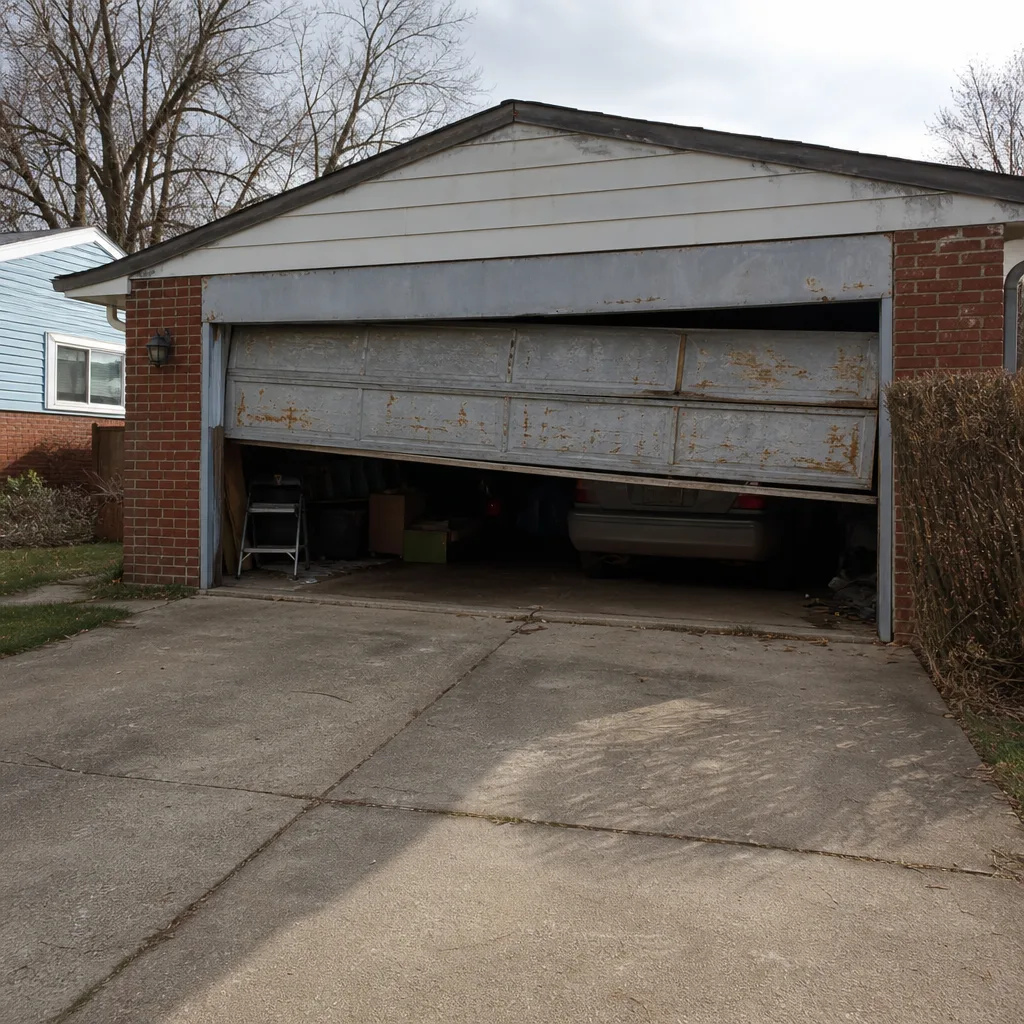 Before
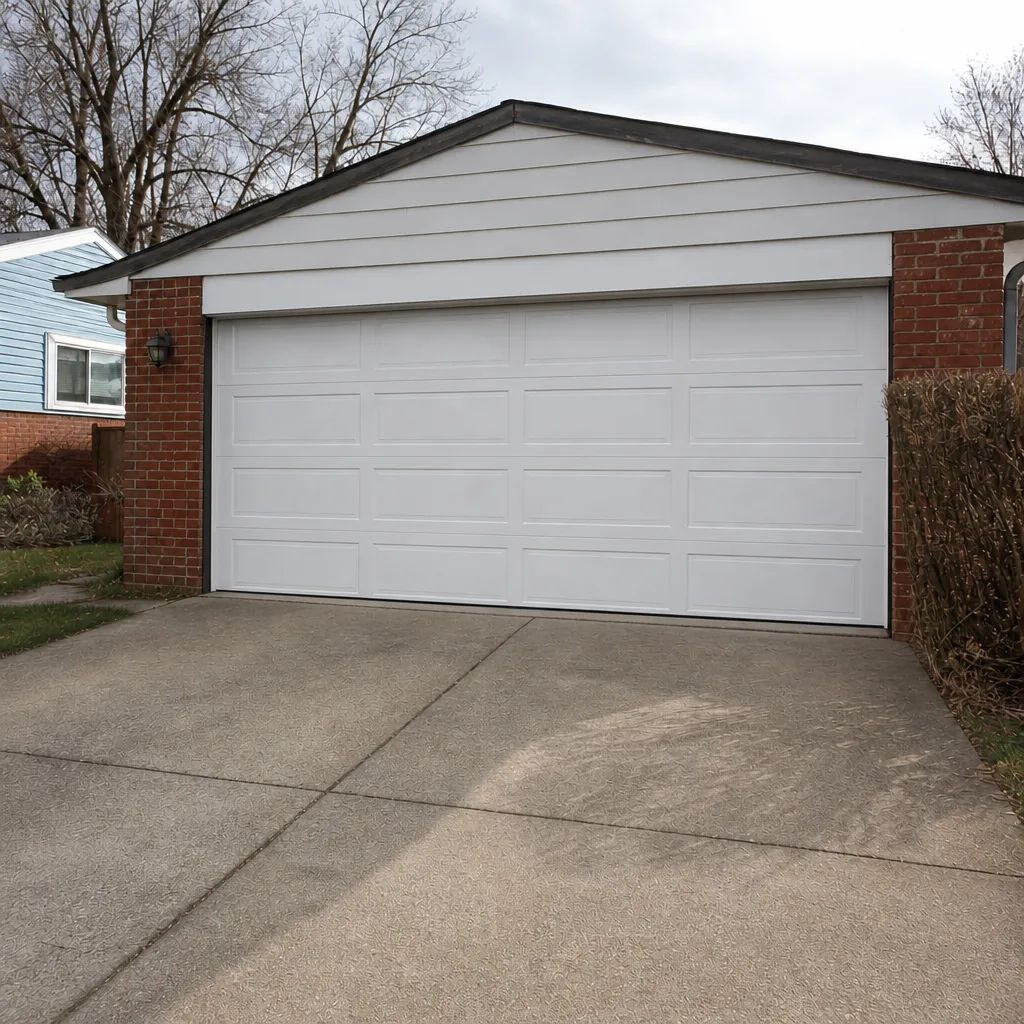 After
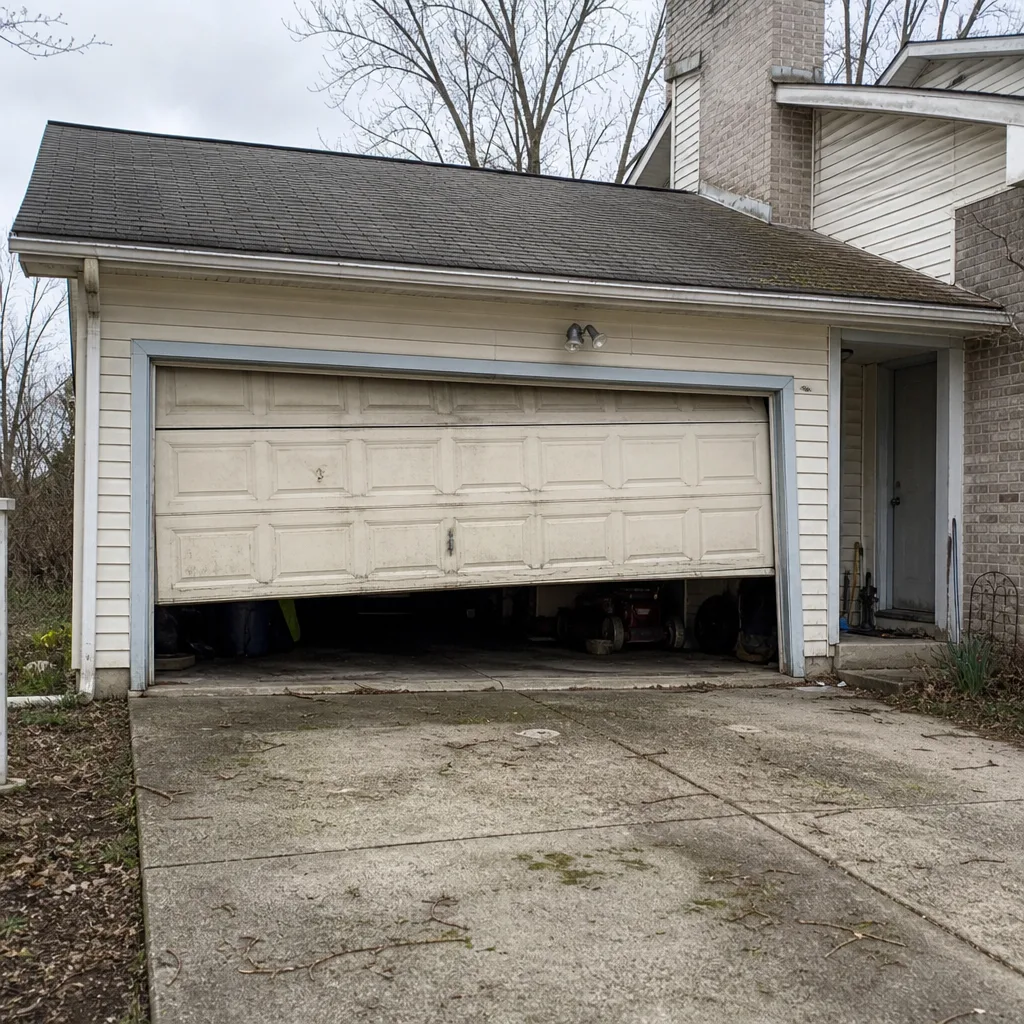 Before
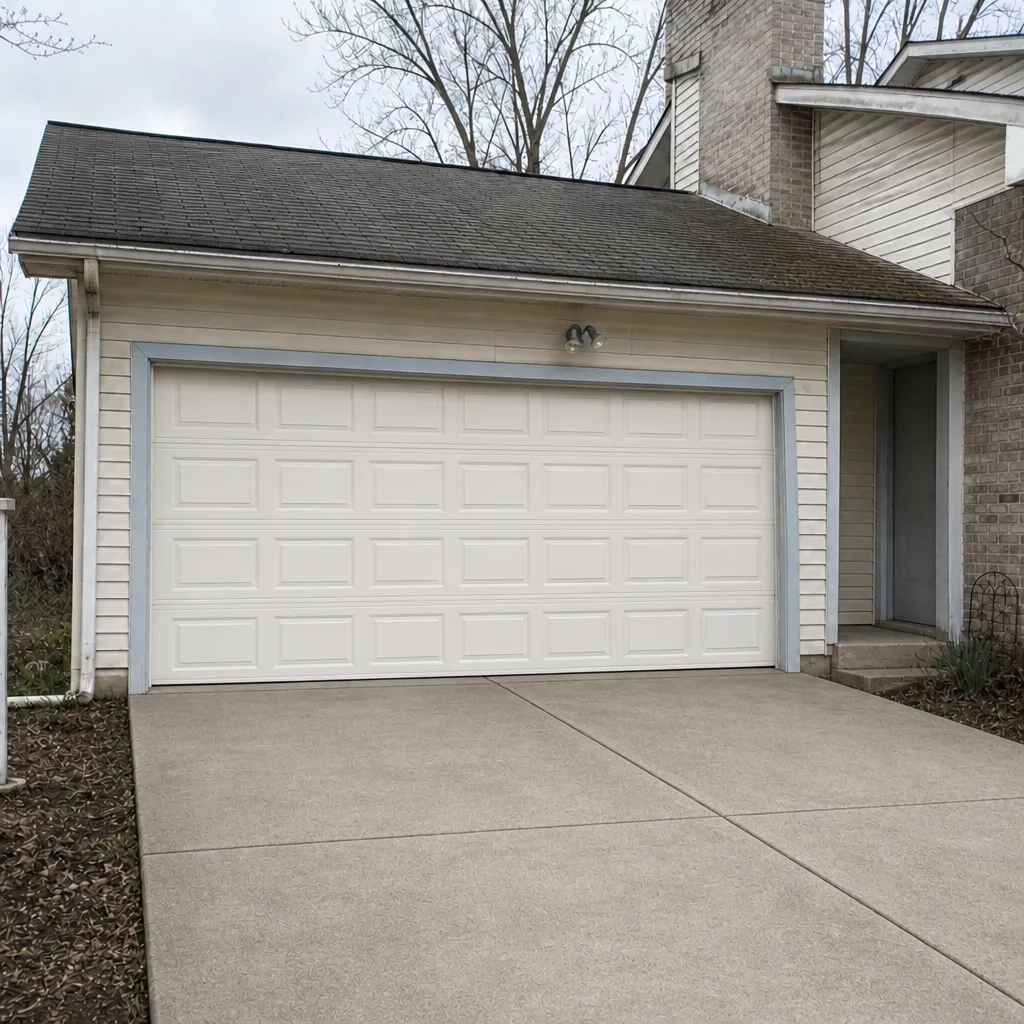 After
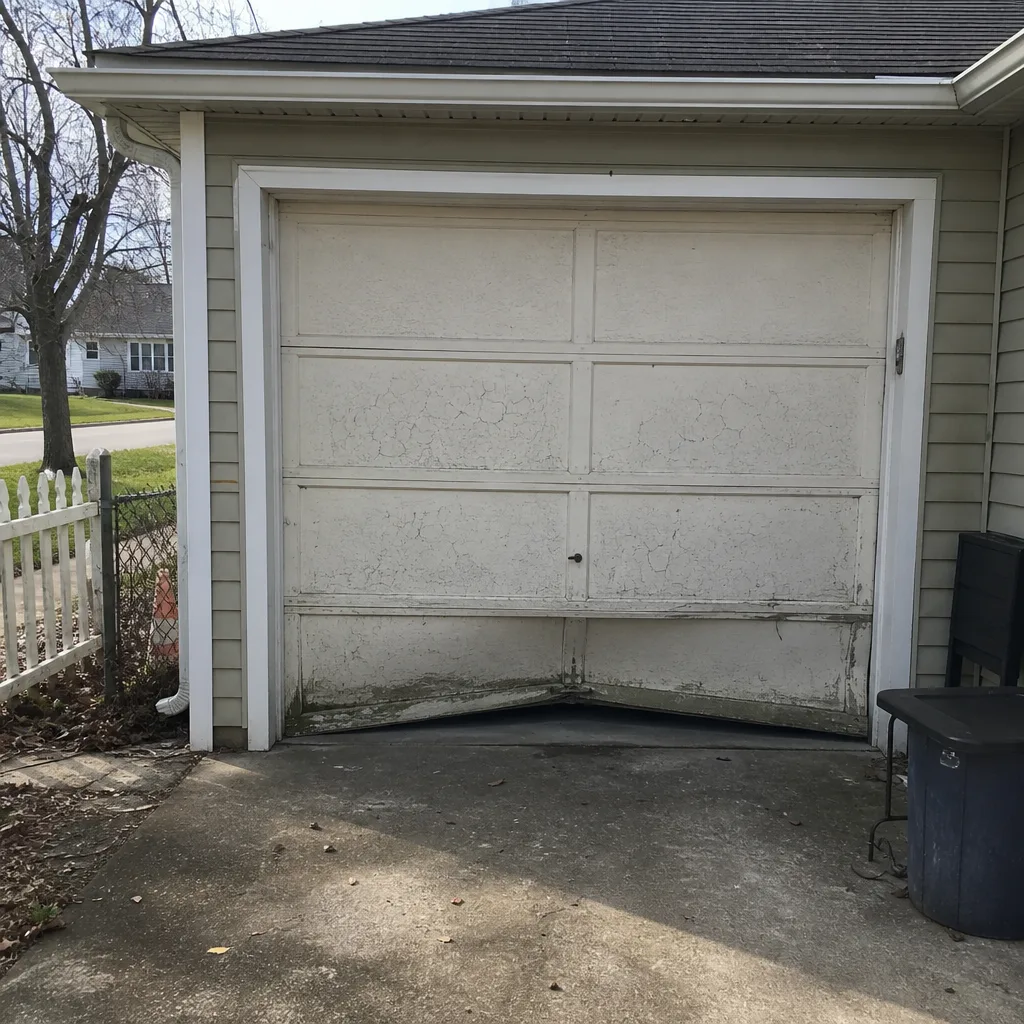 Before
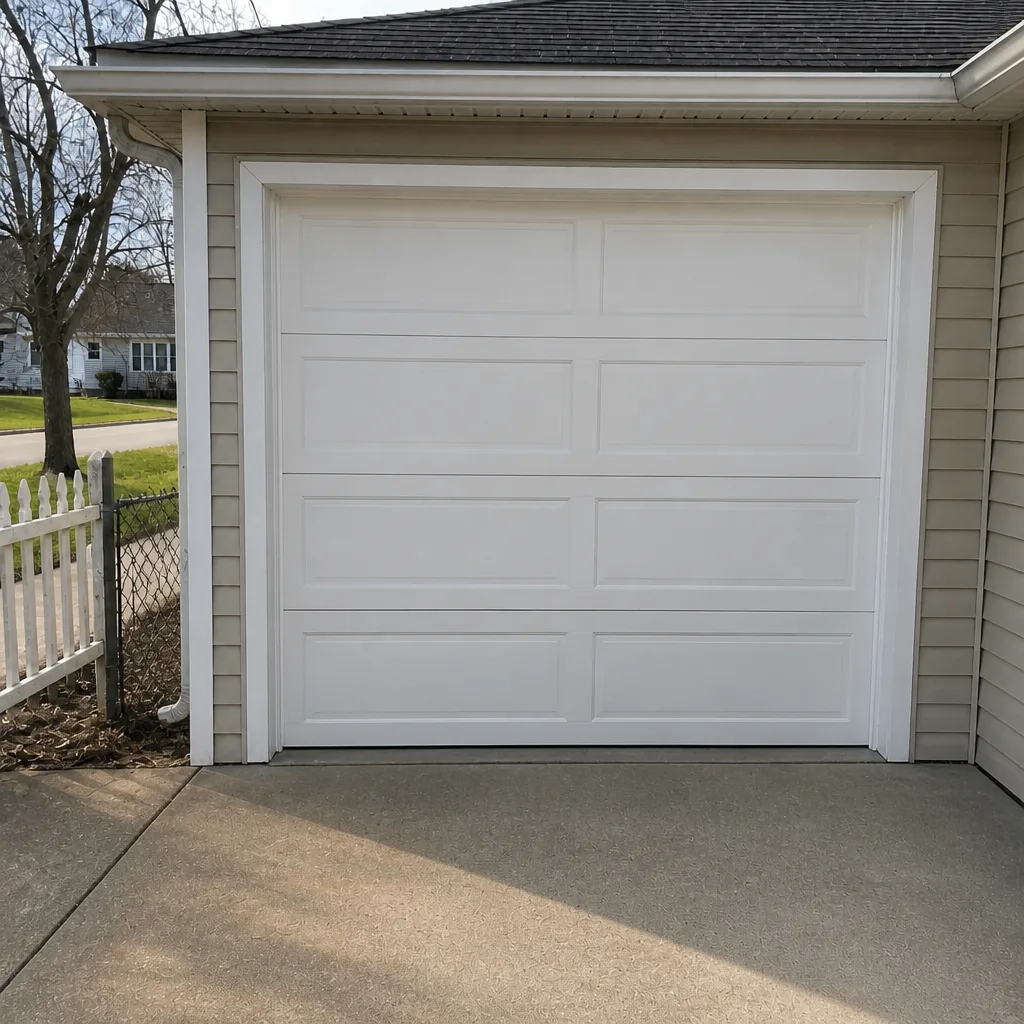 After
When to Call a Professional
Call a professional when the job involves a torsion spring, an extension spring, a lift cable, a bottom bracket, a spring shaft, or a door that has come off its track. Call when the door’s balance has changed – a door that suddenly feels heavy to lift by hand or won’t stay at the halfway point is telling you the spring tension is wrong. Call when your opener has stopped responding to a remote and the sensor lights look normal, because that’s often a logic board rather than a setting. Call when a panel has cracked after a vehicle bump and the door isn’t sealing flush. And call if you’re partway through a repair and the door doesn’t behave the way the manual said it would. Our dispatch covers Hamilton and nearby communities with fast dispatch from 7am to 7pm, Sunday through Friday, and we answer the phone 24/7. The local pro is currently licensed and insured as Ohio requires, and the estimate is free. Call (844) 950-3607.
Frequently Asked Questions
No, and we strongly advise against it even for experienced DIYers. A wound torsion or extension spring holds enough stored energy that releasing it incorrectly can cause serious hand, wrist, or arm injury in under a second. Ohio’s homeowner exemption allows you to work on your own home, but that legal permission does not make the physics safer. Spring work is one of the few garage door jobs where we don’t give step-by-step instructions even when asked – it’s a professional-only task. If your spring has snapped, call (844) 950-3607 for a free estimate. We answer 24/7.
The industry standard cycle count for a Spring is roughly matched to the door’s weight, and the useful life depends more on how often the door runs than on the calendar. A door used as a family’s primary entry point – common in Hamilton homes where the garage is the main entrance from the car – runs 6 to 10 cycles a day and wears springs faster than a door that only opens for the vehicle. The Ohio temperature swing doesn’t accelerate spring cycles directly, but it does stress the surrounding hardware, so visual inspection is worth doing at least a couple of times a year. If you’re not sure how worn your springs are, we can take a look during a free estimate. Call (844) 950-3607.
Yes – Oregon’s neighbor Ohio follows the same homeowner exemption principle: if you own the home and occupy it, you can perform maintenance and repairs on your own property without hiring a licensed contractor. Where it stops protecting you is on warranty claims (some manufacturers require professional installation for certain repairs) and on insurance claims if a homeowner repair causes damage. Neither of those means you can’t replace a bottom seal or lubricate your hinges, but both are worth checking before tackling anything involving springs or the door’s electrical system. Call (844) 950-3607 if you want to know which category your job falls into.
Bottom seal replacement and spring failure run neck and neck depending on the season. Hamilton doors that serve as the primary entry point wear their seals out faster in summer heat and their springs out faster from cycle count. Opener sensor misalignment is the next most common – and often the cheapest to fix, because it’s usually a nudge of the eye rather than a part replacement. If you’re not sure what’s wrong, describe the symptom and we’ll tell you whether it’s a DIY job or a call. Our technicians have up to 8 years of experience diagnosing all of these on the eight major brands.
It depends on the model. A same-model motor swap on a LiftMaster, Chamberlain, or Genie unit is doable for a homeowner with basic electrical comfort and a second set of hands – the tricky parts are the rail-to-motor connection, the safety sensor alignment, and the torque setting. Older Craftsman openers and anything requiring ceiling conduit wiring are usually where the DIY attempt stops. If the door’s response to the remote is erratic rather than a clean failure, that points at the logic board rather than the motor, and a professional diagnostic saves the guess. Call (844) 950-3607 to talk through your model.
Stop, disconnect the opener from the power, close the door fully if it will close safely, and call us. Don’t force anything that won’t move and don’t try to unwind a spring or cable you’ve already begun touching. We’ve picked up where a homeowner has left off many times, and describing what happened on the phone usually tells us enough to know whether you’re safe to leave it or whether we need to come out today. We answer 24/7. Fast dispatch from 7am to 7pm, Sunday through Friday. Call (844) 950-3607.
The Bottom Line
The DIY vs. professional question on a garage door isn’t about your skill level. It’s about which specific tasks carry injury risk and which are genuinely safe homeowner jobs. Bottom seals, lubrication, hinge tightening, and sensor swaps are real DIY wins for a homeowner in Hamilton who knows the profile and has basic tools. Opener motors, panels, and track work are doable with the right preparation but go sideways without it. Torsion springs, extension springs, cables, and bottom brackets are professional-only, full stop, because stored energy doesn’t negotiate. If you’re not sure which category your job is in, or if you’ve started something and the door is behaving differently, the fastest path to a straight answer is a call. We work on your brand, whichever of the eight major lines you have, and our technicians have up to 8 years of experience across all of them. When your door won’t open, close, or stay closed, we can help. Emergency response is a core part of what we do, not an upsell.
If you’re ready to stop debating and get a straight answer, call (844) 950-3607 for a free estimate. We answer 24/7. Fast dispatch from 7am to 7pm, Sunday through Friday. Whether you need garage door repair, garage door opener repair, or a full garage door installation, we can help you decide what’s worth doing yourself and what isn’t. And if you want to know more about Garage Door Repair Hamilton Pros, we’ll be glad to walk you through it on the phone.
Written by the team at Garage Door Repair Hamilton Pros.